Evaporative coolers are good for the environment. The chemical free, clean, energy efficient, and environmentally responsible way to keep buildings cool.
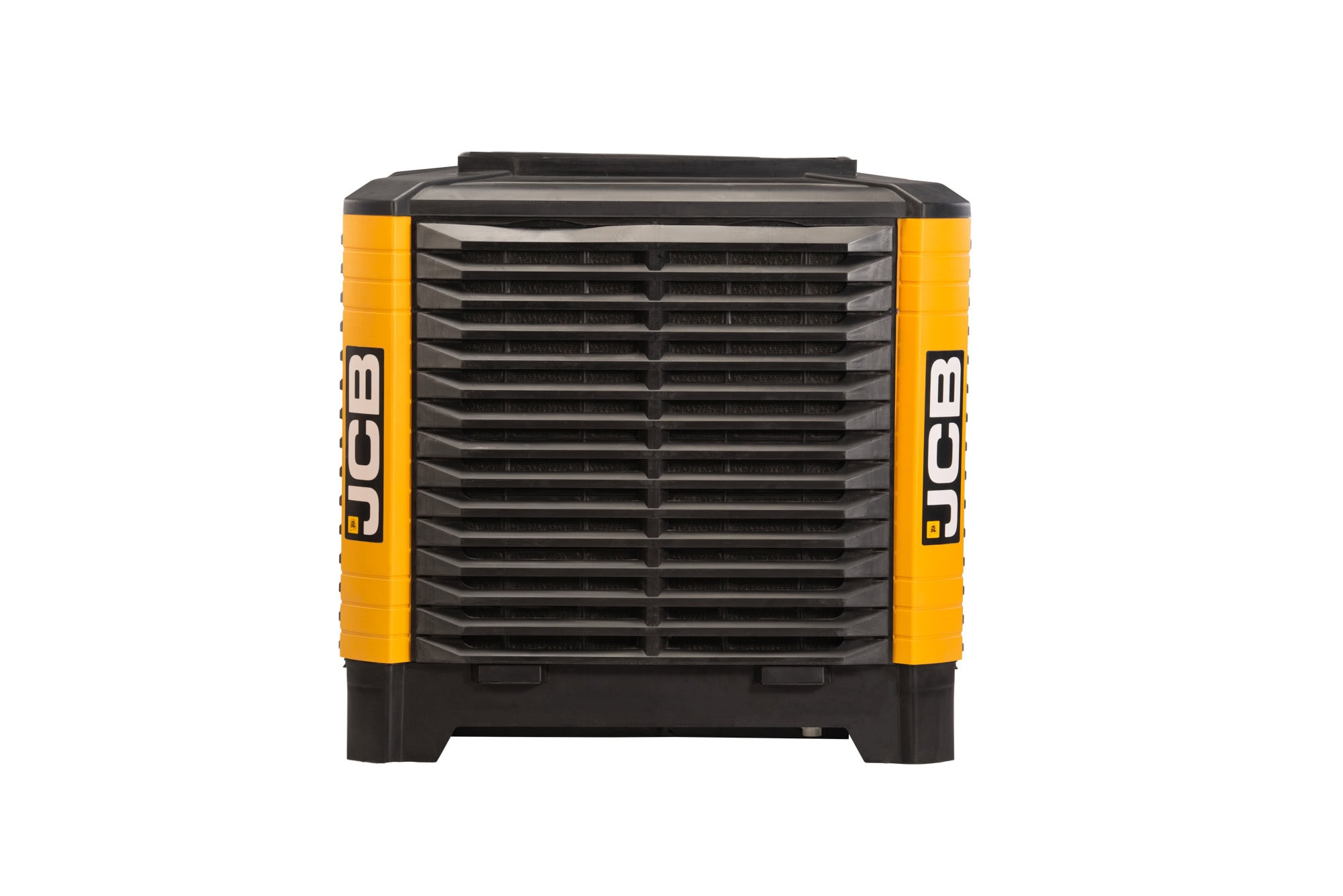
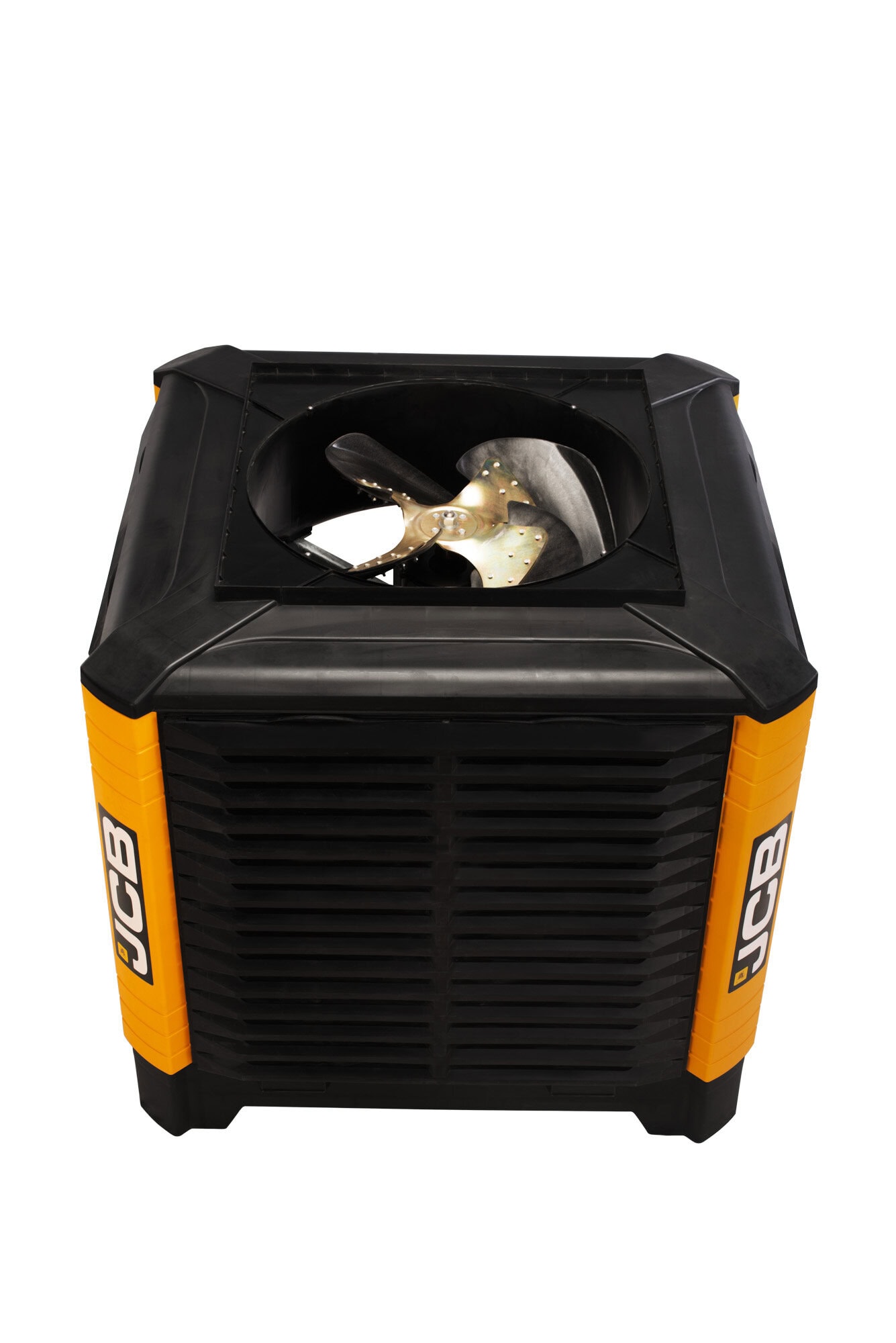
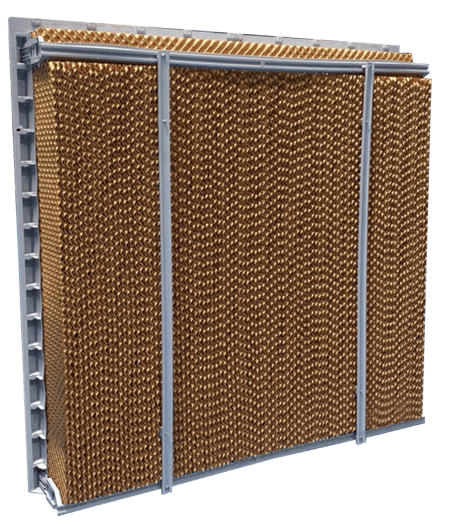
When heat suppresses production, animal welfare, and worker performance, the solution is not recirculated chilled air – it is continuous fresh, cooled air delivered at scale with minimal energy. JCB EAC Evaporative Coolers draw warm exterior air through water-saturated cooling pads, reducing air temperature through evaporation before circulating it throughout the space. No refrigerants. No chemicals. No recirculated indoor air. Heavy-gauge galvanised steel construction, bolted access panels, single-piece corrosion-resistant base pan, and PCB touchscreen control combine into a durable, cost-efficient, and environmentally responsible large-space cooling system.
Heat is among the most directly measurable and most costly suppressors of productivity in agriculture, industry, and commercial operations – and among the most expensive to address using conventional refrigerant air conditioning technology. Traditional air conditioning systems consume substantial electrical power through compression cycles, require specialist maintenance of refrigerant circuits and compressor assemblies, generate greenhouse gas emissions throughout their operational life, and fundamentally recirculate the same indoor air with its accumulated contaminant load rather than replacing it with genuinely fresh air. The JCB EAC Evaporative Cooler range addresses the temperature problem and the air quality problem simultaneously, using the most thermodynamically direct cooling mechanism available: evaporation.
The Evaporative Cooling Principle
When water evaporates, it absorbs latent heat from the surrounding air, converting liquid water to vapour by drawing the thermal energy required for that phase change from the airstream passing across the wetted surface. JCB EAC Evaporative Coolers apply this mechanism at scale: warm exterior air is drawn through specially designed water-saturated cooling pads at high volume, where the maximised wetted surface area of the media generates the evaporative contact required for a measurable temperature drop across the pad. The air delivered into the space is genuinely cooler, lightly humidified, and completely fresh – without any refrigerant cycle, chemical input, or compressor mechanism.
The EAC 30J moves 30,000 m³/h at a maximum power consumption of 2.2 kW. The EAC 22J moves 22,500 m³/h at 1.4 kW. Both figures represent energy consumption that is approximately one-quarter of the electrical demand that conventional air conditioning systems of equivalent cooling output require, a direct operational cost saving that compounds significantly across the continuous use that agricultural and industrial cooling demands during warm weather periods.
Air Quality: Fresh Replacement, Not Recirculation
The air quality advantage of evaporative cooling over conventional air conditioning is as operationally significant as the temperature reduction in agricultural and industrial environments; and it is an advantage that refrigerant air conditioning fundamentally cannot provide. Conventional systems cool indoor air by recirculating it through a heat exchanger, repeatedly passing the same air, with its accumulated carbon dioxide, ammonia, airborne bacteria, fungal spores, dust particles, and moisture through the cooling circuit and back into the original space. In an industrial processing space and agricultural housing environment, this means the contaminant load of the indoor environment is recirculated rather than removed. JCB EAC Evaporative Coolers operate on a positive pressure principle that is the direct opposite. Continuously introducing fresh exterior air through the wetted cooling pads creates a positive pressure inside the building that drives existing indoor air out through natural ventilation openings. The indoor air is replaced with fresh, filtered, cooled air, not recirculated. In dairy barns, this continuous air exchange reduces ammonia concentration, lowers airborne pathogen load, and maintains the air quality that respiratory health requires. In poultry and hog confinement environments, where air quality is directly linked to respiratory disease incidence and growth rate, this fresh air supply is a production-critical function, not a comfort enhancement.
Agricultural Applications
In dairy operations, heat stress is the primary warm-weather production risk. Cows begin experiencing physiological heat stress at the temperature-humidity index threshold corresponding to approximately 25°C in moderate humidity – suppressing dry matter intake, milk yield, conception rates, and immune function in ways that compound into significant production losses across a summer period. JCB EAC Evaporative Coolers reduce internal barn temperature by delivering continuously cooled, fresh air at volume throughout the building, maintaining internal conditions below the heat stress threshold even when external temperatures significantly exceed it.
In poultry houses and hog confinement, the temperature sensitivity of production performance and mortality risk is even more acute. Broiler performance, feed conversion efficiency, and mortality rate are all directly affected by temperature management within narrow thresholds that ambient ventilation alone cannot maintain during warm-weather periods. Evaporative cooling in these environments is not supplementary it is the primary climate management tool for productive and welfare-compliant production in hot-climate agricultural regions.
Construction and Maintenance Design
The heavy-gauge galvanised steel cabinet with polyester powder-coated exterior and interior finish provides the structural and surface durability that agricultural and industrial installation environments require. Galvanised steel resists the corrosive chemical environment of barn operation – ammonia, moisture, cleaning agents – while the powder-coated finish provides the additional surface protection that sustains appearance and structural integrity across years of operational exposure.
The single-piece bottom pan eliminates the welded seam failure mode that multi-piece base designs develop under sustained water contact across the operational life of the installation. Bolted cabinet construction provides straightforward access to all serviceable components: cooling pads, motor, blower, plumbing for the weekly service interval that maintains peak performance. No specialist tools. No welded panels requiring cutting for access. All plumbing fittings included for straightforward water connection to continuous supply. The PMSM brushless direct-drive motor provides the efficient, low-maintenance airflow generation that the system’s operating economics depend on. IP55 motor rating provides the dust and water protection required for agricultural and industrial environments. Stepless speed control through the PCB control system allows airflow output to be matched precisely to ambient conditions – maximum cooling during peak heat periods, reduced output during cooler periods, fully automated scheduling through the touchscreen interface and wired remote.
Environmental Performance
No costly CO2, hydrofluorocarbon, or volatile organic compound refrigerants are consumed or emitted across the operational life of a JCB EAC Evaporative Cooler. Water is the only cooling medium consumed. The electrical energy demand is approximately one-quarter of equivalent conventional air conditioning, reducing the indirect carbon emissions from electricity generation in direct proportion. For agricultural operations managing environmental compliance, carbon footprint reduction, and sustainability commitments alongside production priorities, evaporative cooling delivers the cooling performance the operation requires on the environmental terms the operation can justify.