The AVENGER is a revolution in manure managment. The manure is collected, not pushed. Ideal for the barn and concrete feed pad.
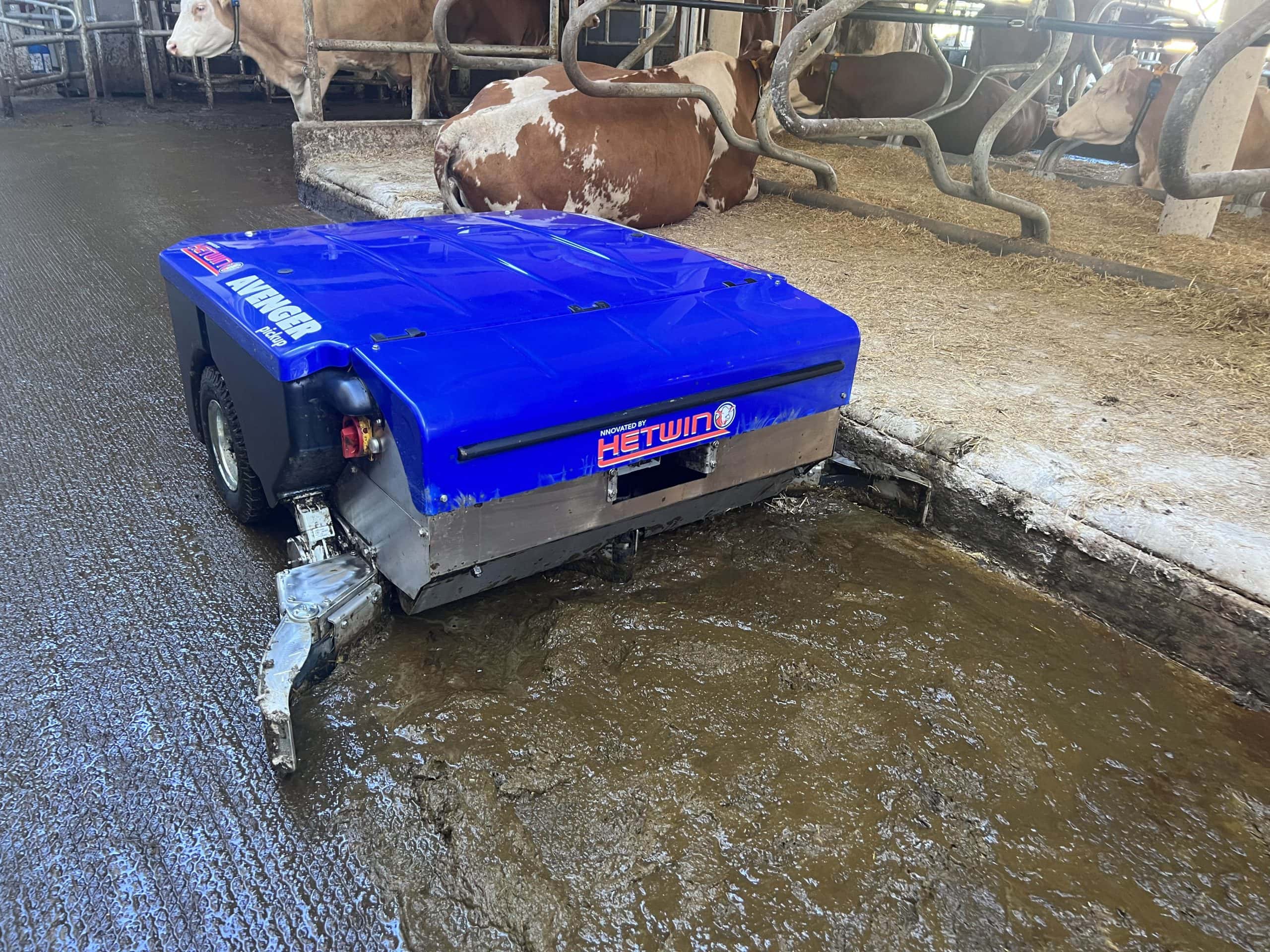
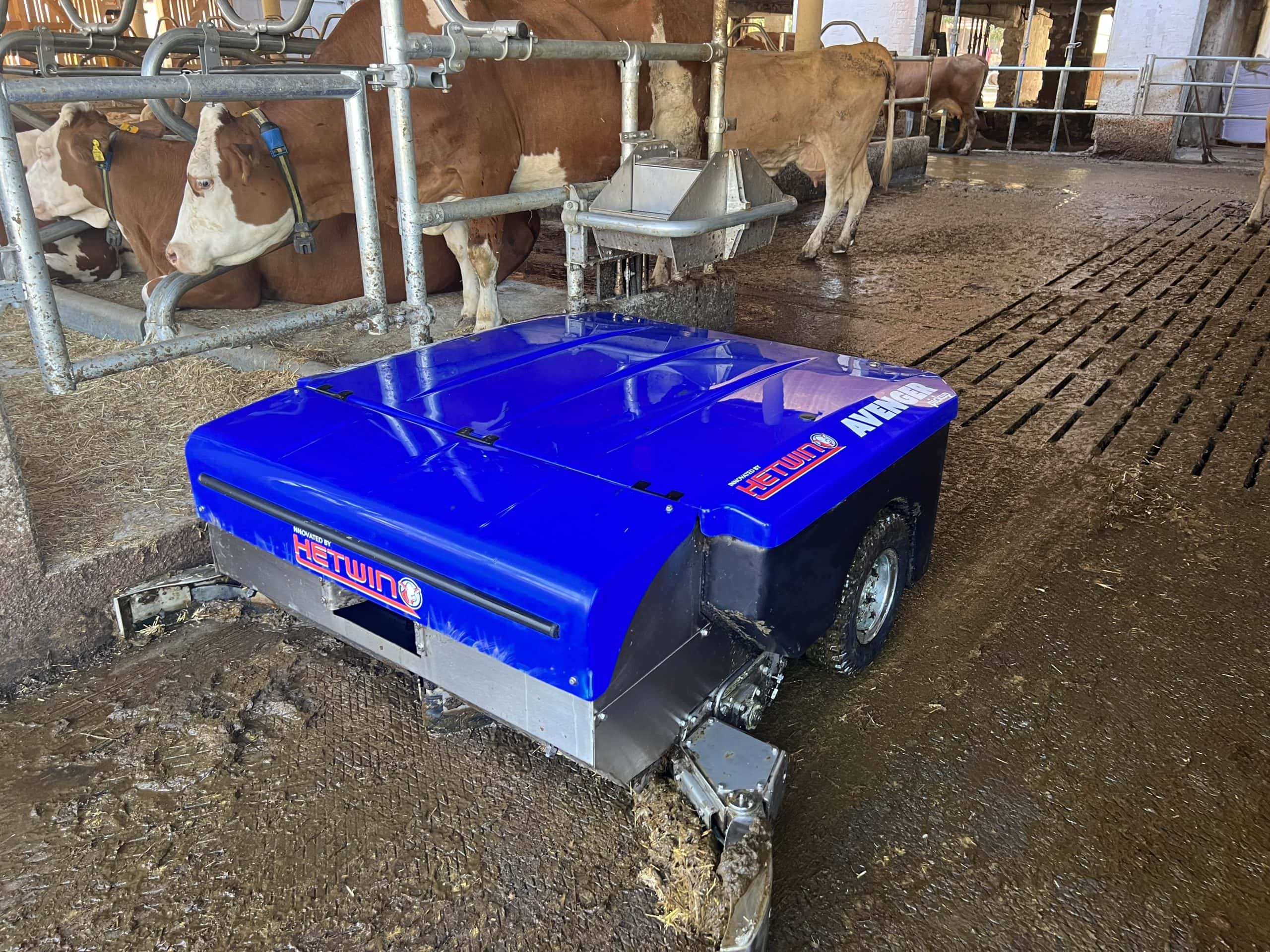
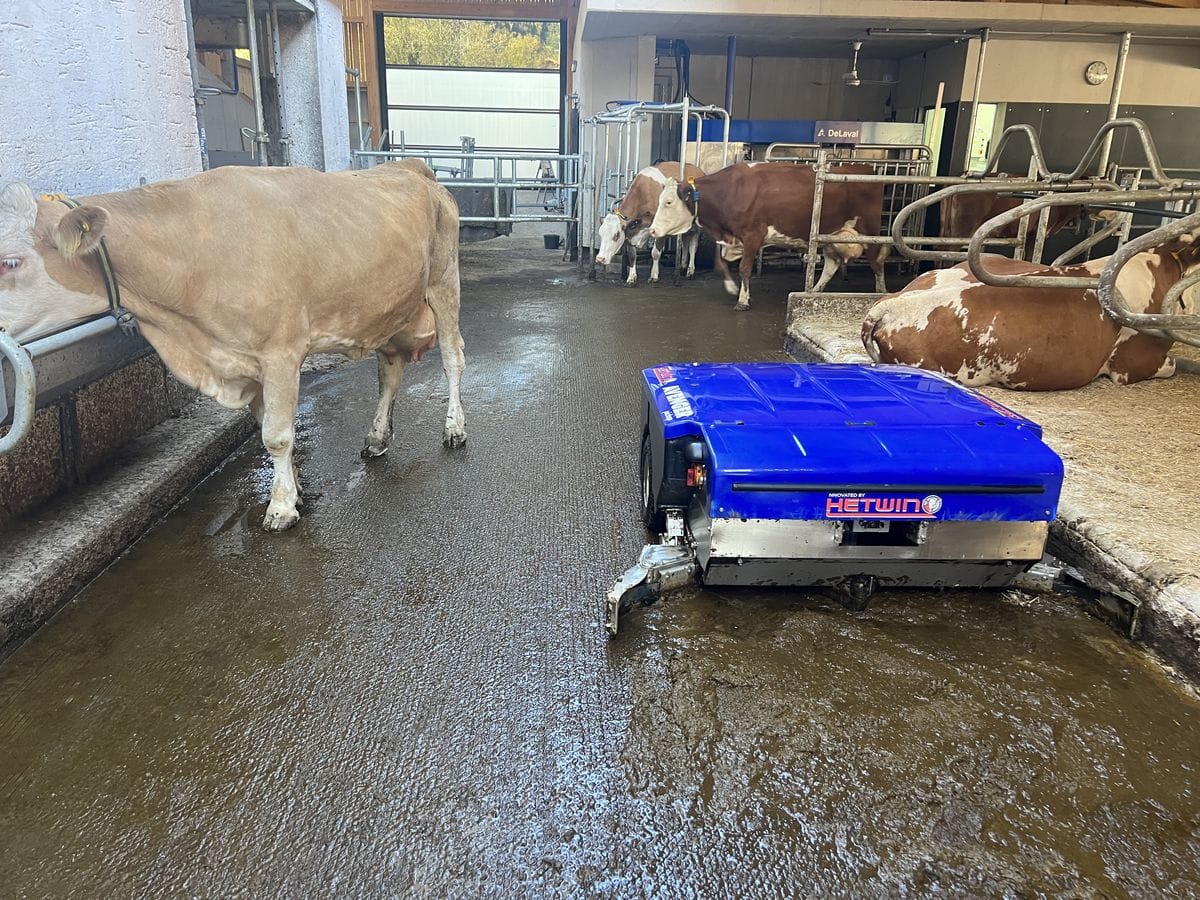
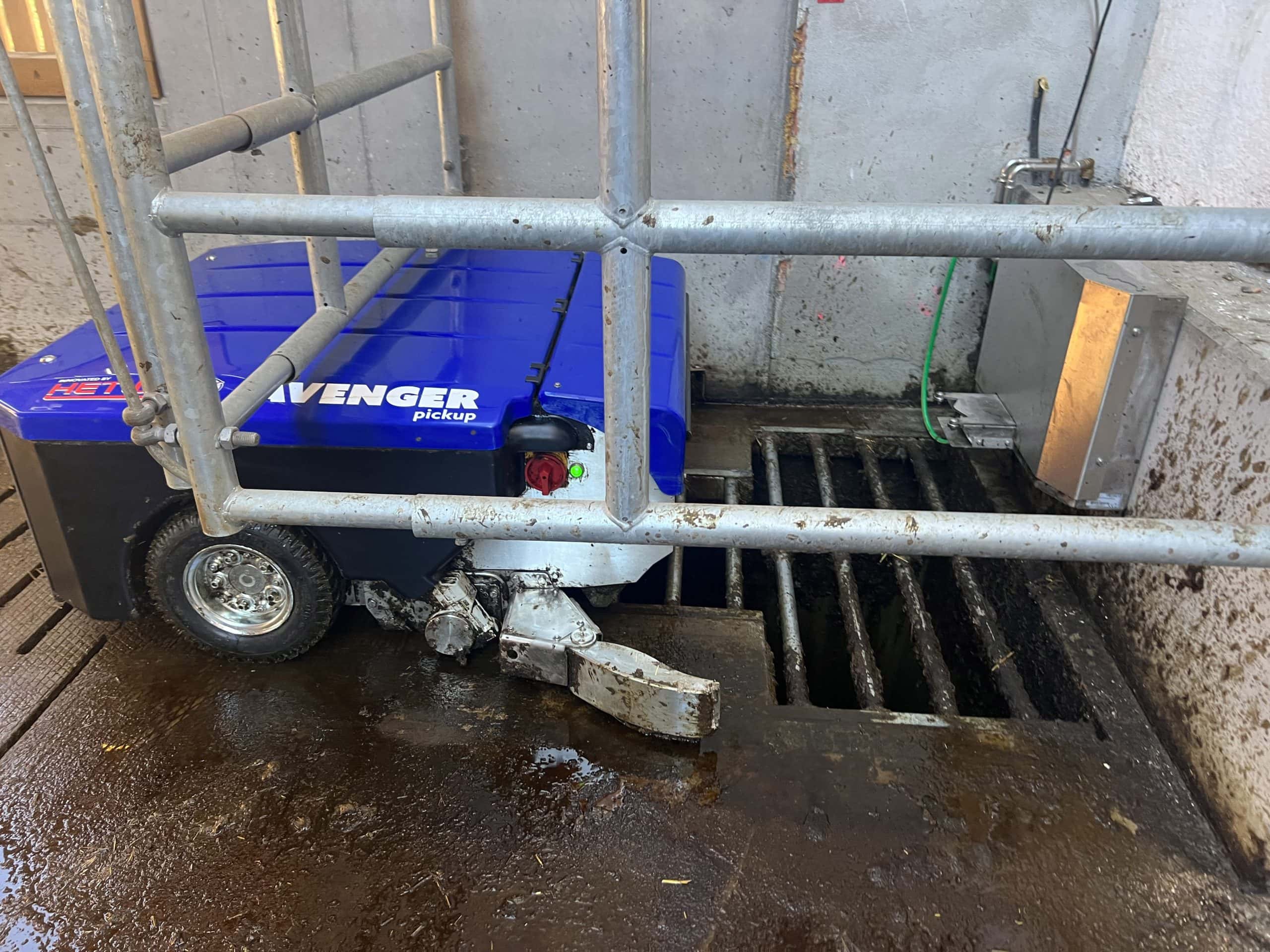
Floor hygiene directly affects hoof health, lameness incidence, and the barn environment that determines herd productivity. The HETWIN AVENGER collects rather than pushes manure — a screw rotor propels waste into a 450-litre rear container while integrated water tanks maintain reliable surface collection. A 1.8-metre scraper blade minimises passes per aisle. Autonomous navigation via floor-embedded reference magnets requires no complex infrastructure. Stainless steel construction throughout. Simple discharge at the parking station. Full remote management via PC, tablet, or mobile device.
Floor hygiene is one of the most direct and consequential determinants of hoof health, lameness incidence, and the overall barn environment quality that shapes herd productivity. Manure accumulation on walking and standing surfaces exposes hooves to sustained pathogen load, creates the slippery conditions that cause falls and injuries, generates the ammonia and odour that compromise air quality and animal respiratory health, and creates the environmental conditions that elevate stress and reduce the willing movement and feed access that production performance depends on. The HETWIN AVENGER is engineered to eliminate those consequences — continuously, autonomously, and without the labour dependency that manual scraping and conventional automated systems demand.
Collection, Not Redistribution
The fundamental engineering distinction of the AVENGER is its collection principle. Conventional scraper systems; either blade scrapers, robotic pushers, or cable-driven systems, move manure along the floor surface toward a collection point, redistributing it across the aisle in the process. The floor is cleaner than it was before the pass, but a residual film of liquid and fine organic matter remains on the surface and is pushed to the collection point rather than removed from the aisle. The AVENGER’s screw rotor mechanism operates differently: it actively propels manure inward from both sides toward the centre and into the 450-litre rear collection container, removing waste from the floor rather than relocating it. The result is a measurably cleaner floor surface after each pass and a cleaner floor between passes as the absence of residual organic matter reduces the substrate available for bacterial recolonisation.
Surface Management and Moisture Control
Reliable manure collection across all floor types i.e. solid, fixed surface, and slatted, requires consistent moisture management at the collection interface. The AVENGER’s integrated 70-litre water tanks provide the controlled moisture application that maintains optimal collection conditions across the full cleaning route, regardless of floor type or manure consistency variation. This integrated moisture management eliminates the collection failures that occur when floor conditions fall outside the operating parameters of systems without active moisture control.
Rear-facing nozzles direct moisture application to prevent the floor surface from becoming slippery during robot operation, addressing the safety risk that wet floors create for both animals and operators. The optional liquid additive dispensing function allows HETWIN-approved chemical additives to be automatically dosed during cleaning passes — actively suppressing ammonia generation, reducing airborne odour load, and improving the air quality of the barn environment as a direct consequence of the cleaning operation rather than as a separate intervention.
Navigation and Infrastructure
The AVENGER’s autonomous navigation system combines rotary encoders in the drive system with a small number of reference magnets embedded in the floor surface, providing the precise positional feedback required for reliable route execution without the complex overhead infrastructure, floor-mounted rail systems, or barn modification that alternative autonomous navigation approaches require. Magnet installation is minimal and straightforward. Route creation, schedule programming, and system monitoring are managed intuitively via PC, tablet, or mobile device, accessible remotely and requiring no specialist technical knowledge to operate and adjust.
The 680mm overall robot height allows the AVENGER to pass freely beneath shed partitions and barn dividers that would prevent taller systems from completing their programmed routes without interruption. This low profile is particularly significant in operations with existing infrastructure that cannot be modified, and in barns where partition height variation across different areas would otherwise require multiple robot configurations.
Herd Interaction and Animal Welfare
The 1.8-metre scraper blade width is an animal welfare engineering decision as much as an efficiency specification. A wider blade covers more floor area per pass, directly reducing the number of times the robot must traverse each aisle to complete its cleaning programme. Fewer robot passes per aisle means less herd disturbance per cleaning cycle, less displacement of resting or feeding animals, and less accumulated stress from repeated interactions with automated equipment across the day. Herds that experience low-frequency, calm cleaning interactions adapt to the robot’s presence more readily, move around it more willingly, and return to rest and feed more quickly after each pass, reducing the behavioural disruption cost of automated cleaning to a minimum.
Discharge, Charging, and Operational Simplicity
The AVENGER’s parking and charging station doubles as the discharge point, eliminating the separate discharge infrastructure that dedicated collection systems typically require. When the collection container requires emptying, the robot returns to its parking station, the flap beneath the collection tank is opened, and the contents drop to the collection area below. No mechanical discharge mechanism. No pressurised ejection system. No operator handling of collected material. The operational simplicity of the discharge process is consistent with the system’s overall design philosophy: autonomous, reliable, and requiring the minimum possible operator interaction to sustain continuous performance.
Construction and Long-Term Reliability
High-quality stainless steel construction throughout all critical components provides the corrosion resistance and structural durability that continuous operation in a working barn environment demands. Barn environments expose equipment to sustained ammonia, moisture, urine, organic acid, and mechanical contact load, these conditions that degrade conventional materials progressively across operational service life. Stainless steel construction eliminates that degradation pathway, maintaining the structural and functional integrity of the AVENGER across the years of daily operation that the capital investment represents.